Begin your 3-Day Free Trial today and start turning things around.

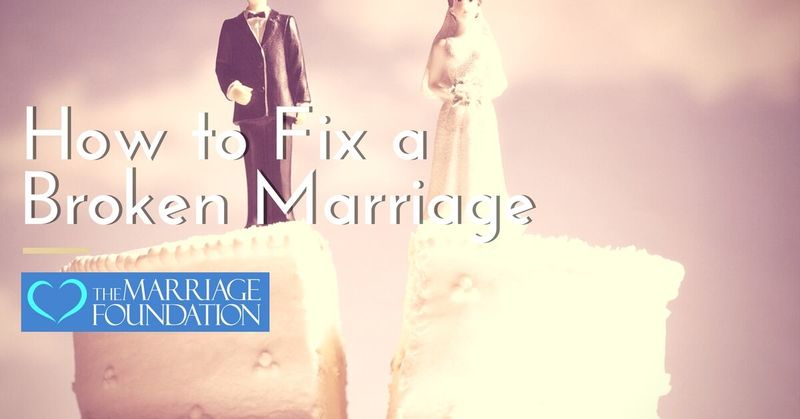
Can a broken marriage really be fixed?
Yes. But not the way most people try to fix it.
A broken marriage is rarely broken because of just one argument, one habit, or one bad season. Most of the time, what you are seeing now is the result of a deeper slide. The arguing, distance, coldness, mistrust, lack of intimacy, and feeling that everything has become heavy are symptoms. They matter, but they are still symptoms.
That is why trying to solve one complaint at a time usually fails.
If your marriage feels broken, the real issue is often that the marriage itself is no longer being approached in the right way. You may both be good people. You may both still care. But caring is not the same as understanding how marriage works.
And when you do not know how something works, effort alone does not save it.
Most people want to know what the problem is.
Was it the fighting?
Was it the distance?
Was it the affair?
Was it the resentment?
Was it the lack of communication?
Those are serious issues. But they are often not the true starting point.
A marriage can only thrive when it is moving in the right direction. When it is not, the problems multiply. The friendship weakens. Reactions get stronger. Misunderstandings become normal. Both people begin protecting themselves instead of building connection.
So no, you usually do not fix a broken marriage by chasing one issue after another.
You fix it by understanding what marriage needs in order to become strong again.
When people panic, they usually do one of three things.
They wait.
They argue harder.
Or they go searching for someone to analyze the latest conflict.
Waiting almost never works because marriages do not usually repair themselves. If anything, a troubled marriage gains momentum in the wrong direction. The longer the slide continues, the harder it feels to stop.
Arguing does not work because arguing is not proof that you are incompatible. More often, it is proof that both of you are reacting instead of building.
And endless analysis usually does not work because a broken marriage is not restored by living inside the problem. It is restored by learning how to move toward the right destination.
That destination is not merely “less conflict.”
It is happiness, love, and harmony.
This is the question many people are afraid to ask because they assume the answer will be no.
But one person absolutely can begin the turnaround.
In fact, that is often how it starts.
Why? Because marriages do not change only when both spouses suddenly agree to do everything right at the same time. Marriages change when the destructive cycle is interrupted and a better pattern begins.
That means if your spouse is cold, skeptical, checked out, defensive, or unwilling right now, you are not automatically powerless.
You still have enormous influence over the direction of your marriage.
You cannot force your spouse.
You cannot control their reactions.
You cannot drag them into becoming different.
But you can stop contributing to the negative cycle. You can stop feeding the momentum. You can become calmer, clearer, wiser, more attractive in spirit, and more effective in the way you show up.
That is where real change often begins.

Before you build anything, you have to stop making things worse.
That means reducing reactive behavior. Stop saying the extra thing. Stop trying to win the moment. Stop chasing, cornering, threatening, lecturing, and forcing emotional conversations when the climate is wrong.
When a marriage is in trouble, many people become urgent. That urgency is understandable, but it often creates more damage.
Calm is not weakness. Calm is traction.
If there is constant conflict in your home, your first victory is not romance. It is stability.
A broken marriage can make you obsess over the latest offense.
What did they say?
Why did they pull away?
What should you text?
What do you say to make them come back?
That kind of thinking keeps you trapped at surface level.
The wiser question is this: what kind of marriage have we actually built, and what does a healthy marriage require that is missing right now?
That shift matters.
It moves you from desperation into understanding.
Most people enter marriage with hope, but not with real education.
They assume love will carry everything. Then when things get hard, they fall back on instinct, emotion, or whatever examples they grew up with.
That is not enough.
Marriage has to be understood.
If you do not know the purpose of marriage, you will keep aiming at the wrong target. You will try to feel safe without learning how to create safety. You will try to feel loved without learning how love is sustained. You will demand better results without changing the way the marriage is being lived.
Marriage is meant to be a place of increasing love, growing happiness, and deeper harmony. When you understand that clearly, your actions begin to line up with the right outcome.
This is where many marriages turn around.
Reinventing yourself does not mean you are worthless, broken, or fake. It means the version of you that is showing up in this marriage right now is not producing the marriage you want.
So something has to change.
Maybe you have become chronically reactive.
Maybe critical.
Maybe needy.
Maybe emotionally flat.
Maybe controlling.
Maybe discouraged and withdrawn.
Whatever the pattern is, you do not fix it by defending it. You fix it by replacing it.
You become more intentional.
More steady.
More thoughtful.
More respectful.
More self-controlled.
More capable of bringing peace instead of more chaos.
This is not pretending. This is growth.
And growth is attractive.
When marriages are failing, both spouses usually carry a case against the other.
That mindset feels justified, but it rarely heals anything.
The question is not who can build the better argument. The question is who will start building the better marriage.
Strength in marriage is not about domination. It is about emotional steadiness, wise action, and refusing to let your lower reactions run the relationship.
That kind of strength changes the atmosphere.
A broken marriage is painful, so people want instant relief.
That is understandable. But while some changes can happen quickly, lasting change comes from methodical effort.
You need a sound process.
You need repetition.
You need encouragement.
And you need to keep going when your emotions try to tell you nothing is happening.
Many marriages improve because one spouse finally stops improvising and starts following a better path with discipline.
Not perfectly.
But consistently.
That is what turns panic into progress.
Some people resist this idea because they think it sounds unfair.
They think, “Why should I change first when my spouse has done so much wrong?”
Because change is not surrender.
It is leadership.
And because the part of the marriage you can influence most directly is the part that begins with you.
A marriage does not become healthy when both people wait for the other one to go first.
It becomes healthy when someone gets serious enough to stop the old pattern and begin living in a better one.
Then you still begin.
Quietly.
Steadily.
Without pressure.
In many cases, trying to force your spouse into “working on the marriage” too early only creates more resistance. Let your change become visible. Let the atmosphere change. Let your spouse experience something different from you.
That does not mean becoming passive. It means becoming effective.
And if your situation includes physical danger, coercion, or serious instability in the home, deal with immediate safety first.
A broken marriage is not always the end.
Sometimes it is the moment that finally forces one or both spouses to stop guessing and start learning.
That is where hope becomes real.
Not vague hope.
Not wishful thinking.
Not “maybe time will fix this.”
Real hope comes when you understand that marriage can be learned, that change can begin with one person, and that a different future is possible when the right process is followed.
You do not need more confusion.
You do not need more blame.
You do not need more random advice.
You need a better way to understand marriage and a better way to live it.
That is how broken marriages begin to heal.
And that is how many of them become stronger than they were before.
If you want to start rebuilding your marriage in a serious, methodical way, begin by learning the principles that actually make marriage work.
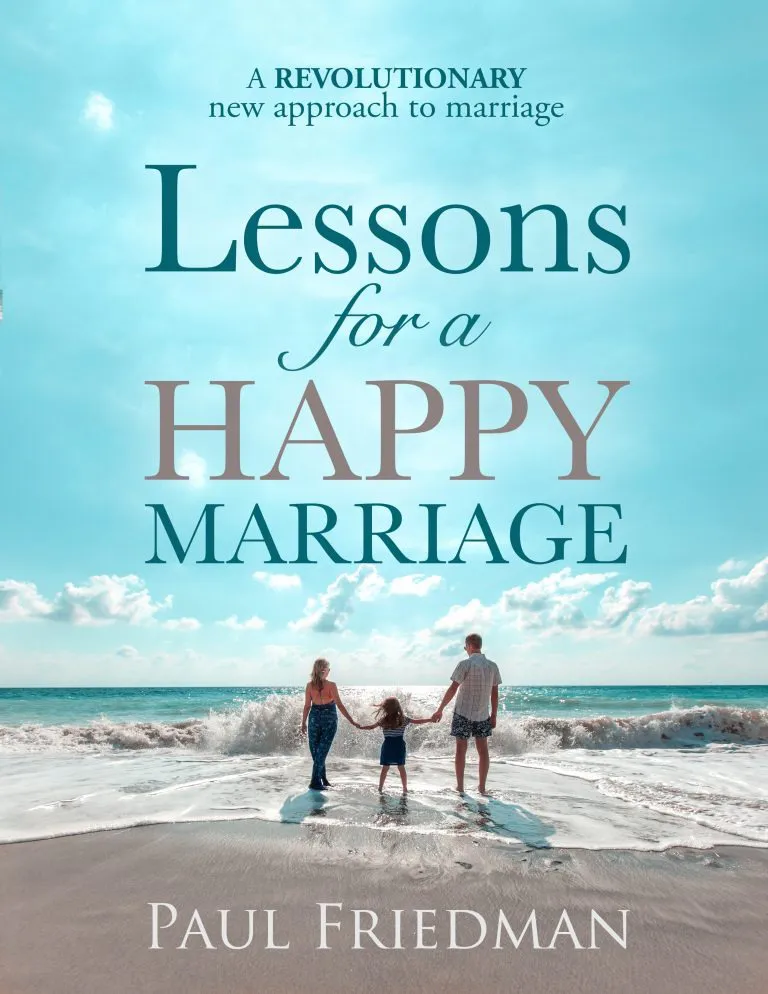
If your situation is mild, start with one of our books.
If your marriage is sliding fast, or already feels deeply broken, begin with the course designed for you. You do not need your spouse to start. In many cases, that is exactly how the turnaround begins.
What matters now is simple:
Do not keep guessing.
Do not keep waiting.
Start learning how to build the marriage you actually want.
You do not need to have everything solved today, and you do not need your spouse to be fully on board before you begin. Sometimes the most important change starts with one person learning a better approach. At The Marriage Foundation, we offer books and courses built to help you take those first steady steps toward restoring love, happiness, and harmony in your marriage.






Sally says:
Thanks, this was very helpful
olivia says:
How do I repair my broken marriage? i need help
Paul Friedman says:
There is no better way than taking the courses we offer. You can start with a 3-day free trial, which rolls into a 30-day guarantee. click on this link to go to our website. https://themarriagefoundation.org/ I’m praying for you.