Begin your 3-Day Free Trial today and start turning things around.

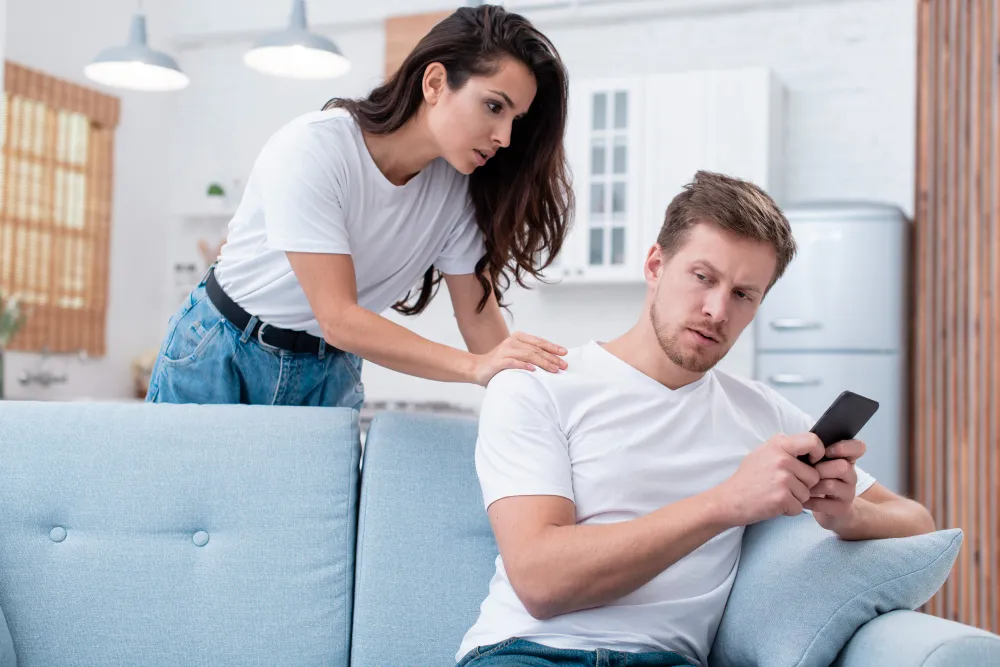
If you are searching for signs your husband doesn’t love you anymore, you are probably not doing it out of curiosity.
You are doing it because something feels wrong.
Maybe he seems distant. Maybe he has stopped being affectionate. Maybe the warmth is gone, the conversations feel flat, and the marriage now feels more like tension, routine, or survival than love.
That is painful. And it is serious.
But before you let fear run the entire situation, take a breath. Not every sign of disconnection means your marriage is over. Not every hard season means your husband has stopped loving you. And even if something important has gone wrong, panic will not fix it.
What will help is clarity, steadiness, and a better response.
Does it always mean he stopped loving you?
No.
This is where many wives make a costly mistake. They feel distance and immediately translate it into one final conclusion: He doesn’t love me anymore.
Sometimes that conclusion is true. Often, it is not that simple.
Choosing the right “solo” tool for your current or overall situation isn’t as complicated as most people think. This will help you.
An “incident” in a happy marriage
You are both human and make mistakes. They don’t “accumulate”. You can consider how your part could have been better so you learn, share a smile, and move on – it’s okay. When you understand your spouse, they feel loved, so you don’t need to lose sleep over the small stuff— keep showing love and enjoy your marriage. You may wish to take advantage of our Free articles, short videos, and our Or Ask a Counselor (free). If you’d like to study marriage, consider reading one of our books – either together or solo. Breaking the Cycle or Lessons for a Happy Marriage.
A rough patch – Things are strained and frustrating
No pointing fingers, blaming, or fuming. Frustration and uncertainty are common but an unnecessary state of marriage. The universal underlying problem is merely a lack of basic marriage knowledge and skills. It’s ironic considering all of us get married! Our two books have been well described as manuals. They common-sensically point the way with “I can do that” guidance. – Breaking the Cycle or Lessons for a Happy Marriage. Or Ask a Counselor (free)
Close to separation
Most people know when their marriage is at or beyond the edge. Don’t be afraid – this is our wheelhouse – why we started TMF, to save “unsavable” marriages. Our complete 12-week, online solo program with access to our TMF marriage counselors is the most effective marriage-saving system we know of. You learn how to stop the trend, reverse it, and make learn your way to happiness. Guidance is delivered with respect and understanding.
A husband can seem cold, distracted, irritated, quiet, unromantic, or disconnected without having fully stopped loving his wife. In many marriages, what has faded first is not love itself, but warmth, hope, softness, appreciation, peace, or the feeling of being emotionally safe together.
That still matters. A marriage cannot thrive without those things.
But it is important not to confuse signs of trouble with proof that love is dead.
If your husband seems different, you are probably noticing patterns like these:
He no longer reaches for you the same way. The hugs, touch, warmth, or tenderness have dropped off. He may not seem eager to be physically close, and that can feel deeply unsettling.
He talks less. He shares less. He seems checked out, distracted, or unreachable. Even when he is physically present, he may feel absent.
Small things seem to bother him. He is shorter with you. More impatient. More critical. Less gentle.
He does not pursue conversation, fun, closeness, or shared moments the way he once did. The marriage can begin to feel flat and functional instead of loving and alive.
When you try to talk about the relationship, he shuts down, gets defensive, changes the subject, or acts like everything is fine when clearly it is not.
This one hurts. He may look lighter with other people, more engaged at work, or more relaxed elsewhere than he does when he is with you.
These signs matter. But taken alone, they still do not automatically tell you the final answer.
They tell you that your marriage needs attention.
In many cases, these signs do not mean, “He has stopped loving you forever.”
They mean something more like:
That is not a small thing. But it is different from a hopeless diagnosis.
The most important thing is not to sit around trying to read his mind. The most important thing is to understand that if love feels blocked, the work now is to remove what is blocking it.
That is where change begins.
When a wife starts fearing that her husband does not love her anymore, the fear itself often makes the marriage harder.
She becomes more watchful.
More reactive.
More hurt.
More needy.
More likely to press for reassurance.
More likely to interpret everything negatively.
More likely to confront, cry, argue, or emotionally chase.
That is understandable. But it usually backfires.
Fear does not restore love. Fear usually creates more pressure, more tension, and more distance.
So while your concern may be valid, your first task is not to force an answer out of him. Your first task is to get steadier inside yourself.
If you think your husband may not love you the way he once did, avoid these mistakes:
Asking, “Do you even love me anymore?” may feel honest, but in many marriages it leads nowhere useful. He may deny it, dodge it, say something harsh, or say something confusing. One emotional confrontation rarely repairs an unhealthy pattern.
When wives feel unloved, many start protecting themselves by withdrawing affection, kindness, and warmth. That feels justified, but it usually deepens the disconnect.
Once fear takes over, everything becomes evidence. Every silence, every missed text, every tired expression, every distracted moment begins to look like proof. That makes you less clear, not more.
The better question is often not, “Does he love me anymore?” The better question is, “What has happened to the love in this marriage, and what can I do to help restore it?”
That question leads somewhere.
This is where TMF’s principles matter.
You do not fix a marriage by labeling, panicking, replaying the past, or waiting for the other person to go first. You fix it by learning how to stop feeding what is wrong and start bringing in what is right. TMF’s core site messaging is explicit on this: one spouse can lead the repair, the work is educational and self-directed, and the aim is fast movement toward happiness and harmony rather than blame or endless unpacking.
So here is the better path:
If you are constantly anxious, emotional, or reactive, you will not be able to see clearly or respond wisely. This does not mean suppressing yourself. It means regaining self-command.
Criticism, lecturing, correcting, emotional intensity, repeated pressure, and tense conversations can quietly starve a marriage of affection. If those habits are present, they need to stop.
This does not mean begging. It does not mean pretending. It means deliberately becoming more peaceful, kind, respectful, and pleasant in your interactions.
A marriage often begins to shift when one spouse stops pouring tension into it.
Maybe he feels distant. But what is the atmosphere between you? Is the home warm? Is there appreciation? Is there ease? Is there softness? Is there respect? That is where the real work usually is.
A few ideas can help, but a marriage in decline usually needs more than random tips. TMF’s own site makes this exact point repeatedly: articles may help, but the deeper change comes through the course, the SEW technique, and ongoing guidance aimed at self-control, better interactions, and stopping destructive patterns.
Sometimes the issue is not just emotional wear and tear.
Take the situation more seriously if:
In those cases, do not hide behind wishful thinking. You still want to stay grounded, but you also want to be honest about the seriousness of what is happening.
Yes.
Many marriages look emotionally dead before they actually are. What has happened is that the love has been buried under habits, hurt, reactions, pride, disappointment, and disconnection.
Love often returns when the destructive cycle is interrupted and the marriage starts feeling safe, warm, and hopeful again.
That is why the most useful response is not despair. It is wise action.
If you are seeing signs your husband doesn’t love you anymore, do not dismiss what you feel.
But do not let fear become your leader either.
The signs may be telling you something important. They may be warning you that your marriage has become strained, disconnected, and in need of real attention. But that is not the same thing as saying all hope is gone.
Your marriage does not improve because you finally force him to explain himself. It improves when someone begins changing the direction of the relationship.
That someone can be you.
If you are tired of feeling anxious, unloved, and unsure what to do next, do not stay stuck in fear. The Marriage Foundation’s course for women is designed to help you stop negative patterns, regain peace, and begin changing the dynamic of your marriage from your side.
Start your free trial today and take the first step toward restoring love, clarity, and connection.





Barbara Turnbull says:
Is this completely confidential? Would like to know before I dive in with a question.
Paul Friedman says:
This is a pubic venue. But if you write to a counselor, you will have full confidentiality https://themarriagefoundation.org/free-marriage-help/