Begin your 3-Day Free Trial today and start turning things around.


Marriage counseling can help when both spouses want to work on one specific problem and need a neutral person to help them reach a fair resolution. It is not always the right answer for recurring relationship problems, a spouse who will not participate, or a marriage that is already in serious crisis. The right kind of help depends on what is actually happening in your marriage.
Choosing the right guidance for your situation ensures your marriage improves faster—without wasted time, money, or emotional exhaustion.
This guide will help you determine what your situation truly requires:
I will also explain when working with a marriage counselor is helpful, and which specific counseling tools help – and which ones you should avoid.
My job is to help you choose the right resource for what you need right now. By consolidating my insights into this guide, I’ve removed the guesswork from where to turn. Additionally, I share critical guidance on how to use a marriage counselor if that is the expertise you need.
Below are common challenges categorized by severity. If your specific situation isn’t listed, you can reach out to our team through our free Ask a Counselor service for personalized guidance.
Here is a way to evaluate the level of help you need, ordered from “This will pass” to “Hire a lawyer.”

In every marriage, there are moments that don’t feel right. They aren’t “nothing,” but they aren’t connection-breakers either. They are simply part of life—impossible-to-avoid frictions that come with being human. They are certainly not a sign of a failing, broken, or unhappy marriage.
Think of them like a tire running low on air: you don’t scrap or sell the car or stay up late worrying; you simply pull up to the pump and fill it. Outside of marriage, when something small goes wrong, you look up a quick fix or ask an expert without panicking because you know it isn’t an end-of-the-world crisis.
Marriage is built on love connecting two soulmates, but you are still two distinct individuals living daily life together. There will naturally be “moments”— most of which you won’t even remember by tomorrow.
I used to get calls about minor upsets, like “he forgot our anniversary.” I would gently remind the caller that they ought to live in the “grateful room” of life, putting their attention on cultivating love rather than worrying about smallish things. Little annoyances and challenges are part of being human; they don’t turn into real problems unless we dwell on them rather than moving on.
For these sorts of things, you don’t need a book, a counselor, or a program, although reading one of our books will help you see things in your marriage more clearly. When you’re simply having a “moment,” you just need a hug. And it is more than okay to ask for one—from your spouse, just to be clear! Just like when you are having a moment.
This is the most common state of marriage because we aren’t taught about it—unless TV sitcoms and silly magazine articles count as education (they don’t!). We are never taught that marriage is meant to be, designed to be, and easily can be lived in a state of real happiness.
Arguments, anger, and detachment may be commonly accepted as “just part of being married,” but that doesn’t make them okay (though an occasional misstep is human). It’s like owning a car that won’t go over 35 MPH: it is broken! Frequent arguments and lingering anger are seeds that sprout into poisonous, marriage-destroying plants. They are only common because people simply don’t know what they need to know. We are not taught the vital rules for marital communication—which I dedicate a substantial section to in my books and provide deep, practical techniques for in our course—nor are we taught how to truly understand the opposite gender.
We know better than to step off a cliff, so we don’t. In the exact same way, the friction in your marriage should simply be taken as an invitation to learn—and I want to teach you.
Most people stumble through marriage—and perhaps through life—experiencing occasional happiness, but mostly boredom. We get used to it, but it isn’t God’s plan for us.
Some have a subtle sense that something is missing and try to fill the void with good things: outside activities, charitable work, and other positive outlets, not realizing that their marriage is meant to be the primary environment for incredible joy. Others go in the wrong direction, dulling their senses with too much wine or drugs. Those aren’t solutions; they make things worse.
Either way, these are good people who still love their spouse and live life reasonably well. But if not dealt with, that “missing something” begins gnawing at the soul. It can become debilitating or lead to really dumb mistakes. This is serious, but it is far from the end.

Instead of taking the bull by the horns, many people rationalize. They convince themselves that no marriage remains truly happy, it’s not just mine, that the joy they see in other couples is just a façade, and that “this is just the way it is.”
Most people, sadly, adapt. To me, that is like being handed a free airline ticket to anywhere in the world, and choosing to walk down the street to watch a movie.
Far too many drift into “roommate mode” or act like business partners, losing their connection as a happy soulmate team. An incredible number of people I have met resign themselves to an “is this all there is?” philosophy. They shut down, disengage, allow resentment to build, and quietly stay together only for the kids. Or, to be frank, they fantasize about a different life and get desperate enough to dip their toes into dangerous waters.
There are many non-remedies people stumble into—quicksand reactions like heavy drinking, porn, or online emotional affairs that suck you in and churn you up. But you don’t have to suffer this way.
We deserve happiness. We have a claim to love—it is our birthright! Happiness isn’t reserved for a “lucky” few, nor is it only for “ideal” or physically gorgeous couples. It is for us to claim, nurture, cultivate, and live. It’s just that we were never taught.
I’m not perfect. Before I began analyzing marriage, I too accepted that marital emptiness was normal—that happy marriages were temporary at best or fake at worst. Like most people, I missed the point of marriage. Now, however, my resolute conclusion—now proven by thousands of couples—is that marriage is designed to be exceptionally happy and filled with transcendent love.
When I first set out to formulate a practical, systematic approach to marriage, I realized I needed an answer to a fundamental question: “Why do we want to be married at all?” (Not why we chose our specific partner, but why we seek marriage as an institution.)
Every person I asked- and I asked scores of people- gave the same basic answer: “Because I fell in love.” When I pressed for deeper motivations, I heard answers like “I wanted a lifetime companion” or “I wanted a family.”
Finally, I turned to our Father—to God. His answer had two distinct parts:

Known universal “headlines” (also known as the 10 commandments) like “Love your neighbor as yourself” make total sense on the surface. They inspire us to goodness, and we keep them in mind. But they don’t tell us exactly how to apply them when life gets complicated.
When I told clients the headlines I “heard”, “Learn to love your spouse unconditionally, because that will make you happy,” the response was often: “That’s easy for you to say,” or “That’s impossible.” As a standalone headline, unconditional love can feel completely out of reach.
True – but this is where real marriage education comes in. True marriage teachings contain practical equations based on universal principles. Here is the equation:
When you do your part, God silently guides your inner thoughts and gives extra positive results – right effort attracts Divine help.
Think of it this way: to feel pure love, one of the “requirements” is that you have to move a mountain of mental obstacles. Picture yourself pounding away on a mountain with a tiny hammer and chisel. But on the other side of that mountain, God has a crew of angels with bulldozers, drilling machines, and dynamite. The moment we start chiseling, He starts blasting. As soon as we make a little effort, He is removing obstacles from the other side, and He pours on the joy.
Marriage is never stagnant; it is either improving or slipping backward. When you learn what to do and how to cultivate love, God pours joy over you, and it positively affects your relationship. You don’t feel joy right off the bat, but I promise you it is there waiting for you.
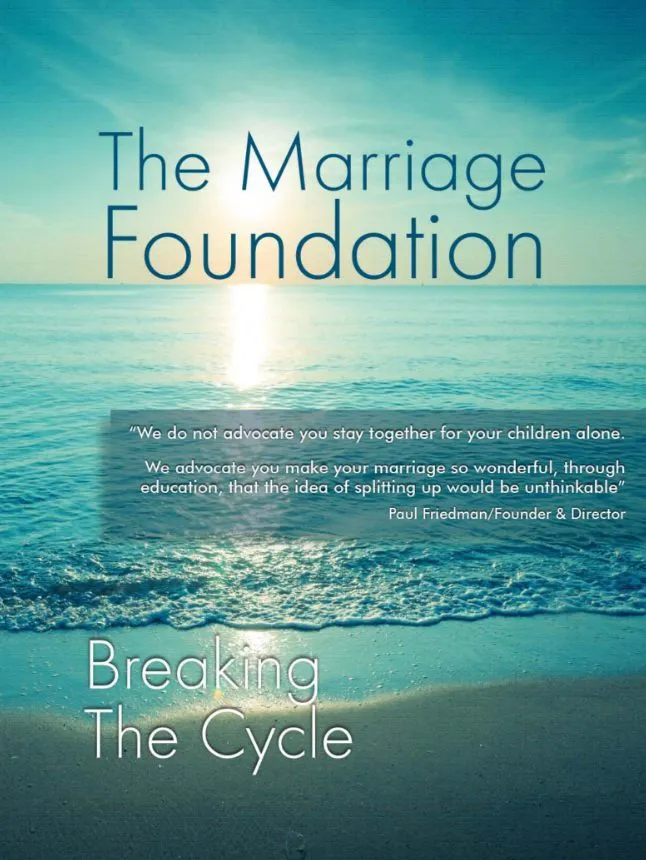
One client reading Breaking the Cycle remarked: “This is a manual.”
That is precisely what it is. Popular marriage books often zero in on a single gimmick or overly broad philosophy. What you need is a genuine understanding of how marriage functions, complete with concrete tools and techniques.
The books I wrote are not frivolous or cute. They are designed to take you to your next step, then the next. They are also designed for individual study, though you can also read them together with your partner—a page or two at a time.
Reading on your own is the self-guided approach. It is the ideal ‘over-the-counter’ solution for every marriage that is not in active crisis. It directly addresses constant bickering, coldness, outside distractions, and emotional withdrawal. As long as neither of you is actively pursuing separation, our books—starting with Breaking the Cycle—provide everything you need to get back on track.
(Note: If someone is living right on the edge of a severe crisis, or if fear and deep desperation are present, moving straight to our online solo course provides the structured intervention required to turn things around.)

Situational stalemates beyond your best efforts to resolve require an expert outsider who is committed to:
Over the years, I helped several couples resolve situations that called for those two principles. An example is when a couple came to me because the husband wanted his mother to move in with them, and after fighting over this for months, the wife kicked him out. It was she who retained me. He was so fed up that he was glad to leave her.
In our sessions, I never spoke about the topic and only allowed them to speak about it when they were moving toward common ground. It took three or four sessions, but they worked it out from a place of love. In other words, I did my job. I moved them from petty obstinacy to recalling and choosing the very reason they got married—love.
I know placing counselors in this limited role contrasts with the commonly held belief that marriage counselors are the ultimate go-to for marriage help, but my experience has shown me that very few understand marriage. It isn’t their fault, but I take your marriage’s success very seriously and don’t want you to get hurt. Having put this out there, I will later share the negatives—the traps of marriage counseling—but for now, I will stay on topic.
Below are examples of isolated issues where a neutral referee can be helpful:
There are infinite examples of other scenarios, and many examples of when not to consult with a marriage counselor:
If you are in immediate danger, being threatened, or experiencing abuse or coercive control, contact local emergency services or a domestic-violence resource. This page is not a substitute for safety support.

The skill of a marriage counselor, as in all professions, ranges from super competent to dangerously inept. A positive reputation, as reported by those who have used their services, is the most reliable assurance. However, if you do not have access to verified reputations, these are some reasonable criteria for selecting a neutral facilitator.
If you choose to hire a counselor or clergy member for a specific deadlock, look for someone who:
As promised, I will now explain why it is best not to use a marriage counselor for general marriage problems.
Marriage counseling—with no fault going to the counselors—has become a profession of well-intentioned men and women who are, frankly, out of their depth. The notion that one can get a degree in psychology, work under an established therapist for a time, then choose the marriage counseling specialization and be accredited without ever having been happily married, says much. Also, the fact that marriage counselors experience a higher-than-normal divorce rate is quite telling.
There are easily understood reasons not to utilize them for general marriage problems:
Not to belabor the point, but bringing two people into a room to discuss what is wrong inevitably leads to blame, defensiveness, and fear—whether the couple is married or not. Your marriage doesn’t need “fixing” as much as one of you (either one of you is enough) needs proper education—an education that matches your desire to be happily married. What you, what everyone needs, is fully covered in our books, Lessons for a Happy Marriage and Breaking the Cycle.
Sometimes, when a marriage has slipped so far that divorce feels inevitable or on the horizon, just a book isn’t enough. I built my reputation on helping those exact couples. In 2009, we started TheMarriageFoundation.org, where we highlight an online course designed to work when things seem dire. It doesn’t work every single time, but you begin with a 3-day free trial followed by a 30-day guarantee. When it looks like—or you are convinced—that your marriage is over or near over, don’t believe it.
My credentials for writing this guide are unique. Before founding The Marriage Foundation, I spent years as a divorce mediator, helping couples walk away from marriages that I now see would have been easy to save. Through that work, I learned a hard truth: divorce doesn’t solve problems.
In many of life’s endeavors, problems are simply challenges meant to help us grow rather than push us to run away—a truth easily overlooked when the stakes are lower. But marriage is different. Marriage is too important to walk away from, especially given the immense suffering that inevitably follows.
What makes it all the more tragic is that a simple lack of marital knowledge is the only reason people become convinced they have no other choice. Put more positively: with a little knowledge, you can step out of the suffering and build a wonderful marriage. Looking back, countless marriages I once helped dissolve could have survived—and thrived—had they only known how.
My dual background, combined with eight years (before starting TMF) of helping hundreds revive their marriages through structured processes, plus countless hours of study and prayer behind the scenes, gives me absolute clarity to know the difference between a marriage that needs a little nudge, one that is just off track and requires only the knowledge provided by our books, or one that is on the edge.
You are, hopefully, not at the point of crisis yet—and with our books, you can make sure you never get there. But even if your marriage is in true crisis, we can help you like no one else can. Our books will guide you if your marriage is heading in the wrong direction, while our online course delivers the exact tools to save your marriage if it has reached a critical stage.
In fact, saving marriages at this critical stage is the primary reason we founded TheMarriageFoundation.org. A fellow mediator actually implored me to start it and covered the legal expenses.
While we also offer pre-marital education, counselor training, and soulmate programs, heading divorce off at the pass is my true passion. As a believer in karma, I feel I am clearing a lot of bad karma with every marriage we rescue.
For anyone facing a genuine crisis, our solo option provides the exact guidance and practical tools needed for full recovery and transformation.
In 2001, a client couple asked me to help save their marriage instead of ending it. Deeply analyzing marriage strictly from a practical perspective—not being a Western psychologist, I focused purely on bottom lines with no fluff, distracting backstories, or “how does that make you feel” queries—we were able to turn things around, and their marriage became great.
That was only the beginning for me; their case was relatively easy, but seeing their success made me realize just how many couples were stuck in that same place of despondency.
From then until 2009, I worked with clients live and in-person, developing and perfecting a system specifically for worst-case scenarios. I found clients through speaking at 2nd Saturday and received direct referrals from some of the top marriage counselors in San Diego who used to refer mediation cases to me.
I did charity work for local agencies, and as my reputation spread—after helping a famous couple in Hollywood—I began helping actors, screenwriters, and other prominent figures. My clients eventually spanned from California to Connecticut and to English-speaking couples overseas.
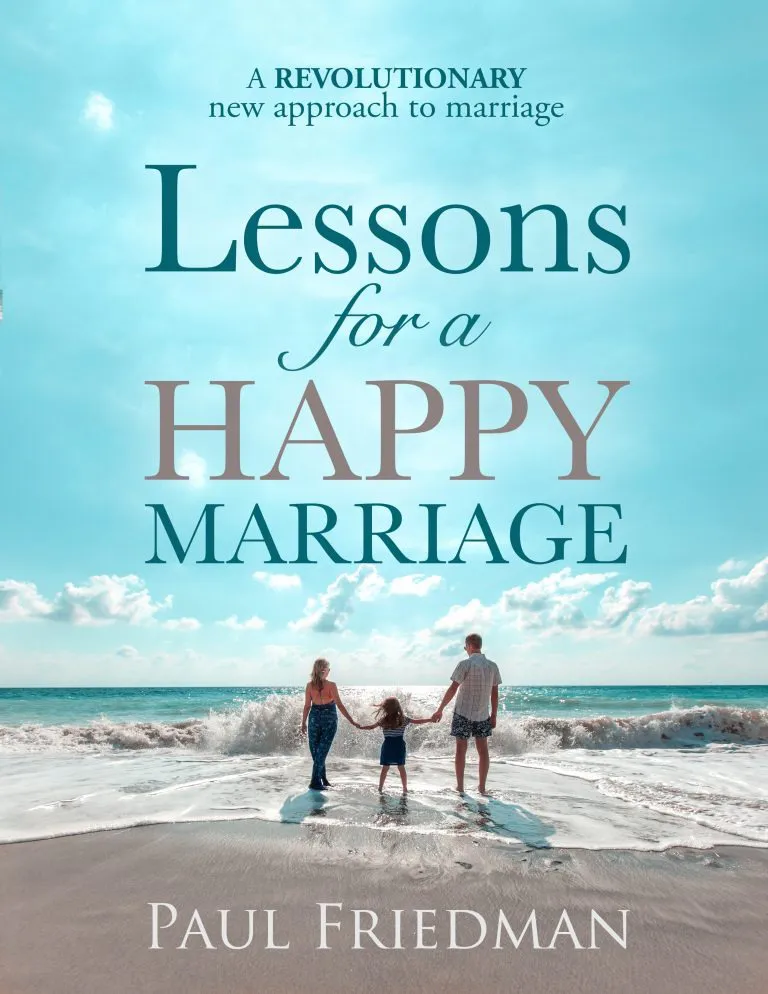
During that time, I wrote two books: Lessons for a Happy Marriage for the general public, and later a deeper version used to train therapists, Breaking the Cycle.
In 2009, we founded TheMarriageFoundation.org as a non-profit dedicated to saving marriages on the brink of divorce—or, often in the couples’ eyes, already past saving. Today, the entire proven framework is available through our gender-specific online solo programs, allowing anyone to transform their marriage from the privacy of their own home.
If you are staring divorce in the face, we have exactly what you need. But remember: most marriages are not in dire straits, nor are they on their way to divorce. Don’t use overkill marriage-healing methods. They aren’t necessary, and they will leave you more confused than helped and possibly burn you out. Your efforts are best suited to your specific situation, which I list below.

The online course we offer is overkill for most marriages. Unless you are in a crisis, the preferred way to improve your relationship is by reading one of my books. Our online courses—one specifically for men and one for women—require the kind of focused effort most people won’t make unless their backs are completely against the wall.
When a marriage begins slipping, most people naturally think, “I’ll just try harder.” That instinct isn’t wrong; it is right and fair, and sometimes it works. However, for your marriage, I have to ask you: try harder at doing what?
Remember, the underlying problem is that you entered marriage without being taught what to do in the first place. It isn’t your fault—it simply is what it is. We all start off doing many things that look easy, only to find out they aren’t. I did that when I bought my first pair of inline skates; it took two weeks for the scrapes on my elbows and the pain in my wrists to subside!
Marriage is meant to be wonderful, fulfilling, and incredible. In theory, marriage should be easy: we fall in love, feel our partner’s love, and—as they say in England—Bob’s your uncle. But then we start losing our peace, patience, confidence, and connection. As we try harder using trial-and-error, or ideas we read or heard about—well, I have seen what that usually looks like—things go from bad to worse.
Sad to say, many even try traditional marriage counseling, other courses, retreats, and a host of other things that looked good before coming to us. Our books and courses are epic and peerless.
If you are experiencing friction but not facing anything on the list below, get one of my books instead. Otherwise, if you are staring a true breakdown in the face, our online course is your vital lifeline.

When I was in my twenties, I built houses, and I loved it! The mason I hired was from Europe—a true master craftsman. One day I joked with him: “Stan, the chimney isn’t true (straight).” Without even looking back, he replied: “Nope. The house isn’t true.”
He knew, and he knew he knew.
That is how it is with this course. Everything is accurate, practical, clear, well-explained, and purposefully designed: to get you out of the swamp, break the downward trend, and get you moving in the right direction.
From the very first hour, you will learn things you had no idea you didn’t know. You will learn, apply, make mistakes (usually), write to our counselors (sometimes), and see clearly how the process works and how ideally it suits your needs. Initially, you may be tentative and not quite sold. But as you test what you learn, your commitment to following it will grow – some cherry-pick at first, but not for long. Everything is like mathematics – it works in all cases.
Your spouse will slowly come to believe you are sincere, and they will gradually begin to feel hopeful. In some cases, seeing your changes may even inspire them to take their version of the course, too. When that happens, you will get a discounted price for them – but don’t push them. If it isn’t their idea, they won’t take the course even if you sign them up.
But they don’t have to, anyway—because it only takes one person to save a marriage. It takes you.
Imagine your marriage as a sealed container—or think of the two of you alone on an island. In this space, the only things that enter are what you and your spouse allow in. Words, thoughts, and deeds enter your marriage through only two sources: you and your partner.
If you unilaterally stop bringing negative thoughts, deeds, and words into that space, half of the nonsense impacting your marriage ceases to exist immediately. If you then begin filling that space with loving words, deeds, and thoughts, the laws of displacement kick in, and the environment changes completely (consider Shakespeare’s The Taming of the Shrew).
But stopping your negative behaviors isn’t easy! That is why this course requires real effort. The container concept sounds perfectly reasonable in theory—until you actually try to execute it in real life. How many of your New Year’s resolutions held, and for how long? Changing habits is difficult—it can feel harder than leaping tall buildings with a single bound!
Back in 2001, when a client couple asked me to save their marriage instead of mediating their divorce, I used this exact container model. I explained it as a straightforward choice of free will regarding their speech and actions. They loved it, I loved it, we did role-playing, cited examples, they got it, and off they went—until the husband returned to my office: “Mr. Friedman, I cannot control my mind. I want to say the right things, but…”
He was right. Doing what is right is nearly impossible when fighting against ingrained mental habits.
He was right, and I knew this was bigger than the both of us, so I turned directly to God. The only way I can describe what happened next was that I got a cosmic download.
All at once, I saw the complete schematic of the soul, mind, and body. I saw impulses, compulsions, and where they originate—the psychophysiology, gender complexities, and biological instincts. All of it. I saw a near-complete list of obstacles to peace. I understood anger, sexual misunderstanding, fear, defensiveness, and on and on. I was overwhelmed.
He also gave me a tool that was new to the world. It leverages free will into a dynamic force, allowing us to master the “rascal immovable mind” with ease. Without the right tool, even a simple task is impossible. You can’t turn a Phillips head screw with your fingernails—no matter how hard you try. The SEW Technique is the exact driver designed to turn the mind.
Until then, I personally suffered from explosive and corrosive anger my entire life. I tried everything—including anger management—with all my might to overcome it, to no avail; nothing worked. But as soon as I received this tool, I was freed from anger. I wasn’t managing it; I eliminated it. Not 100%, but over 80% immediately. Over time, as the SEW technique does its thing, it keeps getting better. Now, if I get angry—which is very rare—it is small potatoes.
This will work for you, too. It is a precise tool. A client who was reading Breaking the Cycle gave this technique its name: The SEW Technique.
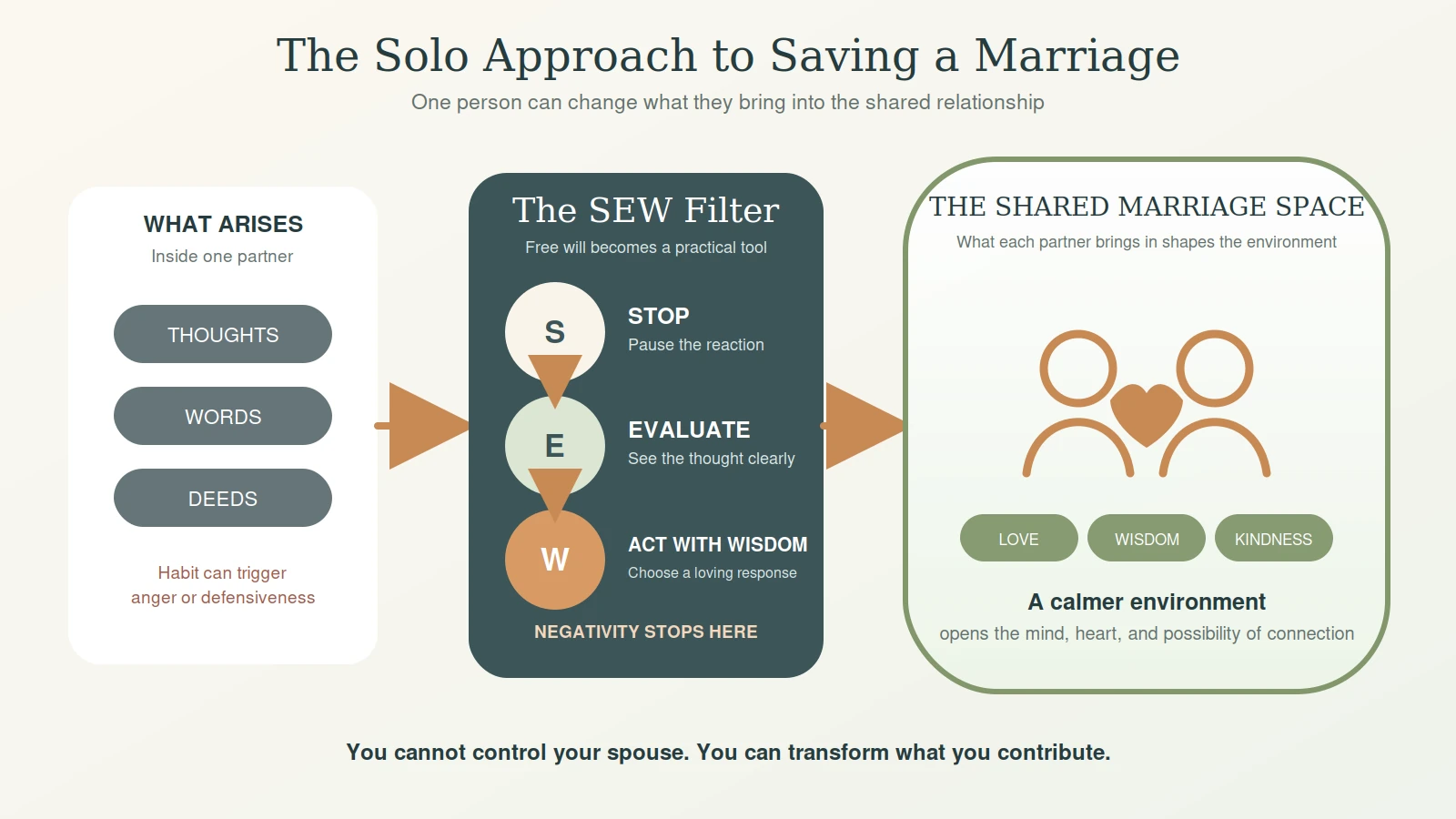
The online courses feature this core technique, which—when combined with our comprehensive marriage teachings—profoundly transforms your thinking and behavior. It renders you both marriage-friendly and inspiring to others. After all, our thoughts and behaviors define our character to our spouse, family, and friends.
By practicing SEW, you eliminate anger, opening both your mind and heart. You will see the world differently, and the world will see you differently.
The video lessons are rolled out over a 12-week period in progressive layers, giving you time to absorb, apply, and integrate each principle. You don’t have to stay stuck in the swamp wondering if your marriage will make it—it will. You will love the steady, grounded transformation that comes over you through this step-by-step process.
| Question | The Reality |
|---|---|
| What if it doesn’t work for me? | It will, and you will see it working—if not within the 3-day free trial, then within the 30-day money-back guarantee period. In the rare cases beyond the course’s reach, you will know well before 30 days. |
| What if my spouse doesn’t respond? | The changes you make are not subtle or unnoticeable. The new you will be a genuine inspiration. As your spouse sees you differently, they will naturally begin interacting with you in ways that reflect who you have become. |
| Will I slip back into old habits? | Some people do temporarily, but not for long. People’s reactions will quickly remind you that you’ve slipped, prompting you to return to the course – which you have lifetime access to—until your new habits take permanent root. |
| Will the results last? | Yes. We regularly hear from individuals who took the course years ago and are still growing in marital happiness. You are finally learning the exact rules, principles, and tools you needed from the start. |
I know you may feel scared by what is happening in your relationship-I have seen that fear a million times. But now the lights are turning on. You will start to see the obstacles for what they are, alongside the incredible opportunities waiting for you.
If you are like most people in crisis, you have already tried everything you could think of-retreats, counseling, or other programs. Ours is designed specifically for worst-case scenarios, and it works.
Thank you for trusting us to show you the way.